Bachelors Thesis
Authors
Caleb De Odorico
School of Psychology, The University of Queensland
Principal Investigator
Abstract
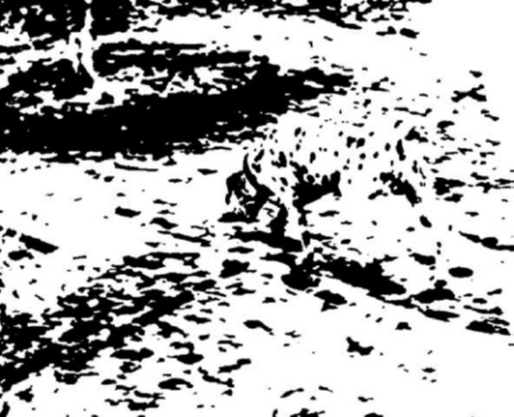
When we engage in visual search, three factors vie for attentional control: top-down tuning, bottom-up feature contrast, and history effects (Awh et al., 2012). This study focuses on isolating the role of top-down tuning, a process by which attention is guided based on the goals of the individual (Folk & Remington, 1998), from the potentially confounding effects of bottom-up feature contrast and target related history effects. We seek to fill gaps in literature by proposing an analogue to the ‘Eureka’ effect as seen in memory research (Auble et al., 1979). This ‘Eureka’ effect, we propose, would allow individuals to attend to a feature based solely on verbal instruction, thus being motivated entirely through top-down tuning. The current study aimed to investigate this by providing verbal instruction that would assist in completion of a particularly difficult search during the course of their task. They were not made aware of this critical information prior, thus had no reason to attend and gain history with the target. We investigated participants search performance through response accuracy and eye tracking measures. Crucially, participants were not given task feedback. Our results showed that participants become more accurate as time with the task increased while eye movement measures decreased, showing potential deployment of covert attention. The critical trial in which top-down tuning was theoretically the only motivating factor of attention was not different from trials with similar amounts of history effects. These findings imply that verbal top-down tuning in this form is not sufficient to drive attention. This may be due to lack of motivation to adapt search strategies and incorporate new top-down information. Additionally, evidence was found to suggest history effects can survive interleaving of irrelevant trials.
Reference
Not published. PDF here.
 Caleb De Odorico
Leave a comment